Choosing the best engineering course after 12th Science in 2026 is one of the most important decisions for students interested in technology, innovation, infrastructure, computers, AI, electronics, machines and modern industries.
With Artificial Intelligence, data science, semiconductor manufacturing, electric vehicles, renewable energy, automation and digital transformation expanding rapidly in India, engineering students today have career opportunities across both traditional and emerging sectors. Government initiatives such as the IndiaAI Mission, India Semiconductor Mission and renewable-energy programmes also show the increasing importance of technology and engineering skills in India's future development.
So, which engineering course is best after 12th Science?
There is no single branch that is best for every student. In 2026, some of the most relevant engineering options include:
- Artificial Intelligence & Data Science
- Computer Engineering
- Electronics & Telecommunication Engineering
- Electrical Engineering
- Mechanical Engineering
- Civil Engineering
The right choice depends on your interests, strengths, career goals and the type of work you want to pursue.
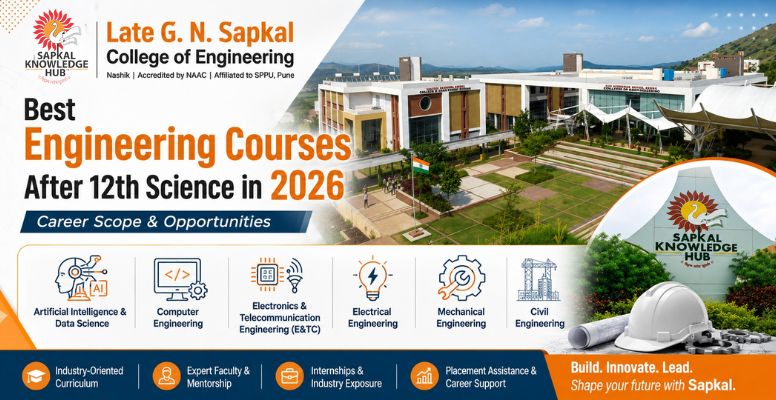
Late G. N. Sapkal College of Engineering, Nashik currently offers undergraduate programmes in all six of these engineering branches, making it possible for students to select a branch according to their interests and career goals.
Best Engineering Courses After 12th Science in 2026
Here is a quick comparison of popular engineering courses and their potential career areas.
|
Engineering Course |
Major Career Areas |
|
Artificial Intelligence & Data Science |
AI, Machine Learning, Data Analytics, Generative AI |
|
Computer Engineering |
Software Development, Cloud, Cybersecurity, Web & App Development |
|
Electronics & Telecommunication |
Embedded Systems, Semiconductor, IoT, Telecom, VLSI |
|
Electrical Engineering |
Power Systems, EVs, Renewable Energy, Automation |
|
Mechanical Engineering |
Manufacturing, Robotics, Automotive, Design, Industry 4.0 |
|
Civil Engineering |
Construction, Infrastructure, Structural Design, Transportation |
Let's understand each branch in detail.
1. Artificial Intelligence and Data Science Engineering
Artificial Intelligence and Data Science Engineering is one of the most emerging engineering courses after 12th Science for students interested in intelligent software, data, automation and machine learning.
AI is increasingly being integrated into healthcare, finance, manufacturing, education, automobiles, marketing, software development and many other industries.
The Government of India's IndiaAI Mission aims to create an ecosystem that accelerates AI innovation and strengthens India's capabilities in artificial intelligence. AICTE's internship platform also currently lists opportunities involving Applied AI, AI engineering and AI-related projects, reflecting the increasing emphasis on practical AI skills.
What Do You Study in AI & Data Science?
Students may learn areas such as:
- Artificial Intelligence
- Machine Learning
- Data Science
- Python Programming
- Data Structures
- Database Management
- Deep Learning
- Natural Language Processing
- Data Analytics
- Computer Vision
- Cloud Computing
- Generative AI concepts
Career Opportunities After AI & Data Science
Graduates can explore roles such as:
- AI Engineer
- Machine Learning Engineer
- Data Analyst
- Data Scientist
- Business Intelligence Analyst
- AI Application Developer
- Data Engineer
- Software Engineer
Who Should Choose AI & Data Science?
This branch can be suitable if you enjoy:
- Mathematics
- Coding
- Problem-solving
- Data
- Algorithms
- Emerging technologies
For students asking which engineering branch has good future scope in 2026, AI and Data Science is certainly an important option to evaluate.
2. Computer Engineering
Computer Engineering continues to be one of the most popular engineering courses after 12th Science because software and digital technologies are now used in almost every industry.
Computer engineers can work across software development, mobile applications, websites, cloud computing, cybersecurity, databases, AI systems and enterprise technology.
What Do You Study in Computer Engineering?
Typical areas include:
- Programming
- Data Structures and Algorithms
- Database Management Systems
- Operating Systems
- Computer Networks
- Software Engineering
- Cloud Computing
- Web Technologies
- Mobile Application Development
- Cybersecurity
- Artificial Intelligence fundamentals
Career Opportunities After Computer Engineering
Students can explore careers such as:
- Software Developer
- Full Stack Developer
- Backend Developer
- Frontend Developer
- Mobile App Developer
- Cloud Engineer
- DevOps Engineer
- Cybersecurity Professional
- Database Administrator
- Software Test Engineer
- System Engineer
- AI/ML Developer
Why Choose Computer Engineering in 2026?
Computer Engineering provides broad career flexibility.
A Computer Engineering graduate can move into software development, cloud computing, cybersecurity, AI, data engineering, product development or entrepreneurship depending on additional skills developed during college.
AICTE continues to support industry-linked internship opportunities, including technology and networking programmes such as its 2026 virtual internship programmes.
For students who enjoy computers, programming and building digital products, Computer Engineering after 12th Science remains a strong option.
3. Electronics & Telecommunication Engineering
Electronics & Telecommunication Engineering, commonly known as E&TC Engineering, connects electronics, communication systems, embedded technology, semiconductor systems and computing.
Its relevance is particularly important in 2026 because India is expanding its semiconductor and electronics ecosystem.
The India Semiconductor Mission aims to develop a strong semiconductor and display ecosystem and position India as a significant global hub for electronics manufacturing and design. The government has also approved the next phase, Semicon 2.0, to further accelerate the country's semiconductor ecosystem.
What Do E&TC Students Learn?
Major subjects can include:
- Digital Electronics
- Analog Electronics
- Communication Systems
- Microprocessors
- Microcontrollers
- Embedded Systems
- Signal Processing
- Internet of Things
- VLSI
- Wireless Communication
- Semiconductor fundamentals
Career Opportunities After E&TC Engineering
Career options include:
- Electronics Engineer
- Embedded Systems Engineer
- VLSI Engineer
- Telecom Engineer
- IoT Engineer
- Hardware Engineer
- Network Engineer
- Semiconductor Engineer
- Automation Engineer
- Electronics Design Engineer
Students can also transition into software and IT roles by developing programming and computing skills.
Is E&TC Engineering Good for the Future?
E&TC can be a valuable choice for students interested in combining electronics, hardware, communication and software.
India Semiconductor Mission also highlights India's existing semiconductor-design talent base and the country's ambition to strengthen semiconductor design and innovation.
4. Electrical Engineering
Electrical Engineering remains one of the core engineering branches and is becoming increasingly connected with renewable energy, electric mobility, smart grids, automation and energy management.
India's renewable-energy capacity continues to expand substantially. The Ministry of New and Renewable Energy reports significant growth in solar and wind power capacity, strengthening the relevance of engineers working with electrical systems, power electronics, energy infrastructure and renewable technologies.
What Do Electrical Engineering Students Study?
Important areas include:
- Electrical Machines
- Power Systems
- Power Electronics
- Control Systems
- Electrical Circuits
- Renewable Energy Systems
- Industrial Automation
- Electrical Drives
- Smart Grids
- Energy Management
Career Opportunities After Electrical Engineering
Possible careers include:
- Electrical Engineer
- Power System Engineer
- Maintenance Engineer
- Automation Engineer
- Renewable Energy Engineer
- Solar Project Engineer
- Electrical Design Engineer
- EV Systems Engineer
- Control Engineer
- Energy Engineer
Electrical Engineering and Electric Vehicles
India's EV ecosystem is also creating additional technology requirements in batteries, charging infrastructure, motors, power electronics and electrical systems.
The Government's PM E-DRIVE initiative supports multiple categories of electric vehicles along with charging infrastructure and testing facilities.
This makes Electrical Engineering particularly relevant for students interested in electric vehicles, renewable energy and modern power technology.
5. Mechanical Engineering
Mechanical Engineering is one of the broadest and oldest engineering branches, but it continues to evolve with robotics, automation, electric vehicles, advanced manufacturing and Industry 4.0.
Modern mechanical engineers work with much more than traditional machines. They can be involved in product design, manufacturing automation, industrial systems, robotics, automotive technology and energy systems.
The Ministry of Heavy Industries' SAMARTH Udyog Bharat 4.0 initiative focuses on the adoption of Industry 4.0 solutions and engineering skill development, reflecting the increasing role of automation and advanced technologies in manufacturing.
What Do Mechanical Engineering Students Study?
Students typically learn:
- Engineering Mechanics
- Thermodynamics
- Machine Design
- Manufacturing
- CAD/CAM
- Fluid Mechanics
- Heat Transfer
- Robotics
- Industrial Engineering
- Automation
- Automobile Engineering
Career Opportunities After Mechanical Engineering
Possible roles include:
- Mechanical Design Engineer
- Production Engineer
- Manufacturing Engineer
- Automotive Engineer
- Quality Engineer
- Maintenance Engineer
- CAD Design Engineer
- Robotics Engineer
- Project Engineer
- Industrial Engineer
Is Mechanical Engineering Still a Good Choice in 2026?
Yes, particularly for students who combine core Mechanical Engineering knowledge with modern skills such as:
- CAD/CAE
- Automation
- Robotics
- Mechatronics
- Electric vehicle technologies
- Industry 4.0
- Data-driven manufacturing
Mechanical Engineering remains important across manufacturing, automotive, energy and industrial sectors.
6. Civil Engineering
Civil Engineering is ideal for students interested in buildings, roads, bridges, transportation, infrastructure, construction and structural design.
India's continued growth requires infrastructure such as residential and commercial buildings, highways, industrial projects, water systems, transportation networks and urban development.
What Do Civil Engineering Students Study?
Major subjects include:
- Structural Engineering
- Surveying
- Construction Technology
- Geotechnical Engineering
- Transportation Engineering
- Environmental Engineering
- Building Materials
- Project Management
- Hydraulics
- Estimation and Costing
Career Opportunities After Civil Engineering
Students can pursue careers such as:
- Civil Engineer
- Site Engineer
- Structural Engineer
- Construction Engineer
- Planning Engineer
- Project Engineer
- Quantity Surveyor
- Transportation Engineer
- Geotechnical Engineer
- Infrastructure Consultant
Civil Engineering is particularly suitable for students who want to work on physical infrastructure and real-world construction projects.
Which Engineering Course Is Best After 12th Science?
The answer depends primarily on what you enjoy learning.
Choose AI & Data Science if:
You enjoy data, mathematics, programming, machine learning and artificial intelligence.
Choose Computer Engineering if:
You enjoy coding, software, websites, apps, cloud computing and computer technology.
Choose E&TC Engineering if:
You are interested in electronics, chips, embedded systems, IoT, communication and hardware.
Choose Electrical Engineering if:
You like electrical systems, renewable energy, EVs, automation and power technologies.
Choose Mechanical Engineering if:
You enjoy machines, automobiles, robotics, manufacturing and product design.
Choose Civil Engineering if:
You are interested in construction, buildings, bridges, infrastructure and structural design.
The best engineering branch is the one that matches both your aptitude and your long-term career interests.
Which Engineering Course Has the Best Scope in India in 2026?
Students frequently search for the engineering branch with the highest future scope.
In reality, different branches serve different growing sectors.
In 2026:
AI & Data Science connects with AI, automation and data-driven industries.
Computer Engineering connects with software, cloud, cybersecurity and digital businesses.
E&TC Engineering connects with semiconductors, embedded systems, IoT and telecommunications.
Electrical Engineering connects with renewable energy, electric mobility and power systems.
Mechanical Engineering connects with automation, robotics, manufacturing and automotive technology.
Civil Engineering connects with construction and infrastructure development.
Current national initiatives in AI, semiconductors, renewable energy, EV infrastructure and Industry 4.0 demonstrate why engineering careers are increasingly multidisciplinary.
Skills Engineering Students Should Learn in 2026
Simply completing an engineering degree may not be enough to stand out in today's job market.
Students should use their four years of engineering to build practical skills.
Important skills include:
1. Programming Skills
Even students outside Computer Engineering can benefit from basic programming knowledge.
Languages such as Python, C, C++ or Java can support technical problem-solving and automation.
2. Artificial Intelligence Literacy
AI is increasingly becoming relevant across multiple engineering disciplines.
Students should understand how AI tools can support engineering analysis, automation, design and decision-making.
3. Industry Software
Learn software relevant to your branch, such as:
- Programming and development tools for Computer Engineering
- AI/ML platforms for AI & Data Science
- Embedded and simulation tools for E&TC
- Electrical design and simulation tools for Electrical Engineering
- CAD/CAE tools for Mechanical Engineering
- CAD, BIM and structural tools for Civil Engineering
4. Communication Skills
Employers value engineers who can explain technical concepts clearly, work in teams and communicate professionally.
5. Internships
Internships provide exposure to real projects and workplace practices.
AICTE maintains a dedicated national internship portal where students can explore industry opportunities across different technical areas.
6. Projects
Build projects that demonstrate practical application of your knowledge rather than depending only on academic marks.
7. Problem-Solving
Companies increasingly need engineers who can analyse problems and develop practical solutions.
How to Choose the Best Engineering College After 12th Science
Choosing the engineering branch is only half of the decision. Students should also carefully select the college.
Before taking admission, check:
- AICTE approval
- University affiliation
- Accreditation
- Experienced faculty
- Laboratories
- Practical learning facilities
- Internships
- Industry interaction
- Placement training
- Campus recruitment support
- Technical events
- Student projects
- Infrastructure
- Career guidance
A good engineering college should help students develop academic knowledge, technical ability, practical skills and professional confidence.
Engineering Courses at Late G. N. Sapkal College of Engineering, Nashik
Students searching for engineering courses after 12th Science in Nashik can explore programmes offered by Late G. N. Sapkal College of Engineering (LGNSCOE).
For 2026–27, the college officially lists the following undergraduate engineering programmes:
- Computer Engineering – 120 seats
- Artificial Intelligence and Data Science – 120 seats
- Electronics & Telecommunication Engineering – 120 seats
- Mechanical Engineering – 60 seats
- Civil Engineering – 60 seats
- Electrical Engineering – 60 seats
The total listed undergraduate engineering intake is 540.
Late G. N. Sapkal College of Engineering is affiliated with Savitribai Phule Pune University (SPPU), approved by AICTE, and accredited with NAAC B++ Grade.
The college also has a dedicated Training & Placement Cell to support career preparation and campus recruitment activities.
Admissions for the 2026–27 academic year are currently listed as open on the official college website. Students should verify current eligibility requirements, admission schedules, fees and seat availability with the official admission office before applying.
Why Consider LGNSCOE for Engineering in Nashik?
Late G. N. Sapkal College of Engineering provides students with access to both traditional and emerging engineering branches.
Students can choose from:
Technology-focused programmes:
Computer Engineering and Artificial Intelligence & Data Science
Electronics-focused programme:
Electronics & Telecommunication Engineering
Core engineering programmes:
Electrical, Mechanical and Civil Engineering
This combination allows students to choose a branch based on their individual interests instead of simply following the most popular trend.
The college's academic environment, laboratories, faculty guidance, Training & Placement support and engineering programmes make LGNSCOE an option worth considering for students searching for an engineering college in Nashik after 12th Science.
Frequently Asked Questions About Engineering Courses After 12th Science
What are the best engineering courses after 12th Science in 2026?
Popular engineering choices in 2026 include Artificial Intelligence & Data Science, Computer Engineering, E&TC Engineering, Electrical Engineering, Mechanical Engineering and Civil Engineering. The best branch depends on your interests, aptitude and career goals.
Which engineering course has the best future scope?
There is no single course with the best scope for everyone. AI & Data Science and Computer Engineering are closely connected with digital technology, while E&TC benefits from developments in semiconductors and electronics. Electrical Engineering has opportunities in energy and EVs, Mechanical Engineering supports manufacturing and automation, and Civil Engineering supports infrastructure development.
Which engineering course is best for a high-tech career?
Students interested in software and emerging technology can consider Artificial Intelligence & Data Science, Computer Engineering or Electronics & Telecommunication Engineering. However, students should choose according to their aptitude rather than selecting a branch only because it is currently popular.
Is AI and Data Science a good engineering course after 12th?
Yes. AI and Data Science can be a suitable engineering branch for students interested in programming, mathematics, machine learning, data analytics and artificial intelligence. India's ongoing IndiaAI Mission also demonstrates the national emphasis being placed on AI innovation.
Which engineering branch is best for government jobs?
Civil, Mechanical, Electrical, Electronics and Computer Engineering graduates may find opportunities in different government organisations depending on recruitment notifications and eligibility criteria. Students should always check the specific qualification requirements of each examination or vacancy.
Which college is best for engineering after 12th Science in Nashik?
Late G. N. Sapkal College of Engineering (LGNSCOE) is a strong choice for students looking for engineering education in Nashik. The college offers programmes in Computer Engineering, Artificial Intelligence & Data Science, E&TC, Electrical, Mechanical, and Civil Engineering, along with practical learning, industry exposure, and placement support.
Which engineering courses are available at Late G. N. Sapkal College of Engineering?
LGNSCOE currently offers undergraduate programmes in Computer Engineering, Artificial Intelligence & Data Science, Electronics & Telecommunication Engineering, Electrical Engineering, Mechanical Engineering and Civil Engineering.
The best engineering course after 12th Science in 2026 depends on where your interests and abilities meet future career opportunities.
Students interested in software and computing can explore Computer Engineering.
Those interested in the rapidly developing world of artificial intelligence can consider AI & Data Science Engineering.
Students fascinated by electronics, chips and connected devices can explore E&TC Engineering.
Students interested in renewable energy, power and electric mobility can consider Electrical Engineering.
Those who enjoy machines, manufacturing and automobiles can choose Mechanical Engineering.
And students interested in buildings, construction and infrastructure can pursue Civil Engineering.
Instead of selecting an engineering branch only because it is trending, students should consider their aptitude, interests, course curriculum, practical exposure and long-term career goals.
For students looking for engineering admission in Nashik for 2026–27, Late G. N. Sapkal College of Engineering offers six undergraduate engineering branches covering computer technology, artificial intelligence, electronics and core engineering disciplines.
Choose the branch that matches your interests, build practical skills throughout your engineering degree, and prepare yourself for the technologies and industries shaping the future.